Why Communities Keep Origin Stories
Why communities keep origin stories becomes clearer when you compare tellings: this listening plan helps you notice what stays, what shifts, and why it matters.
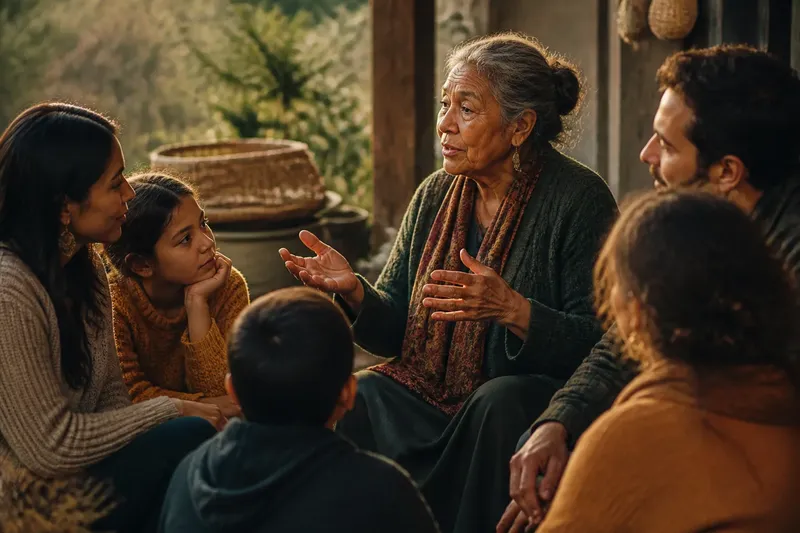
The most common mistake with origin stories is treating one familiar version as a community’s complete, unchanging account. That can erase the choices people make for different listeners and leave newcomers with a polished tale but little sense of its meaning. To understand why communities keep origin stories, notice where a version is told, whom it addresses, and what it asks listeners to carry forward.
Find the story’s setting
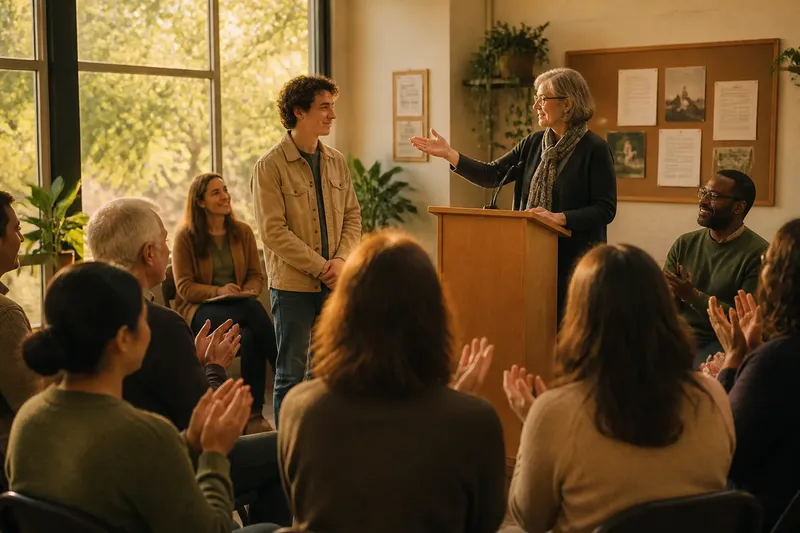
Start with public tellings in places such as a museum label, school handout, neighborhood walking tour, family-history display, or welcome presentation. Note the setting and audience before deciding what the story means. If you are speaking with members of a living community, ask whether notes or recordings are welcome and follow their guidance.
Listen for who is present at the beginning, which place matters, and what decision or difficulty shapes the account. Notice what makes the group feel connected and what the teller asks listeners to remember. One telling may emphasize a homeland; another may center cooperation, displacement, work, or a founding promise.
Some accounts are private, ceremonial, or intended for particular audiences. If a community sets limits on sharing, respect them; understanding a story includes understanding how it is kept.
Compare public tellings
Choose a few accessible tellings from the same community, such as a public oral-history recording, a local-history display, and an event program. Record where each version appears and whom it seems to address. Look for shifts in emphasis, not a single definitive text.
A telling for children may make a difficult beginning easier to follow. A public address may stress endurance or collective responsibility, while a welcome presentation may explain customs long-time members take for granted. The account’s central people or place can remain recognizable even as different details move forward.
Say a neighborhood association publicly shares an invented story about residents organizing to protect a community garden. For a family gathering, one speaker highlights children planting the first beds; for a public meeting, another emphasizes neighbors negotiating the garden’s continued use. Comparing those versions, you would record the shared place and organizing effort, then note that each audience hears a different reason the garden matters. This invented situation illustrates a listening method, not a claim about an actual association.
Use these checks to keep your comparison specific:
- If the same people or place appear in each telling, note that shared anchor; if they do not, record the difference and avoid assuming the accounts describe the same beginning.
- If a detail moves to the foreground, write down its apparent relevance to that audience; if no clear reason emerges, mark it as uncertain rather than guessing.
- If a telling leaves something out, check its length and setting before judging the omission; if you still need context, consult another public version from the community.
- If the teller names an obligation or value, record the words used; if none is stated, describe the story’s action without assigning it a lesson.
- If the material is clearly offered for public use, use it within its stated limits; if permission or audience is unclear, ask before recording or repeating sensitive details.
- If two accounts differ on a detail that can be checked, separate that factual question from the story’s remembered meaning; if no suitable public record is available, leave the point unresolved.
Notice the story’s present work
Ask what the origin story does for people now. It may explain why a place is cared for, why a custom continues, or why a community remembers an obligation. It can distinguish shared inheritance from personal memory without suggesting that every member experienced the past in the same way.
Notice who gets to speak and who is named. Does the account recognize several strands of belonging, or center one group’s experience? Is a newcomer positioned as inheriting a responsibility, learning a history, joining an ongoing conversation, or some combination? These details show how a remembered beginning can shape relationships in the present.
It is not worth collecting every version you can find if your question is simply how one public telling speaks to its audience. A few carefully chosen accounts, with their settings identified, are more useful than a large pile of quotations without context.
Questions about origin stories?
Why do origin stories change?
Each telling addresses listeners with different knowledge, needs, and questions. A community can preserve a recognizable beginning while shifting which events or values it brings forward.
Does a changed version mean the story is false?
Change alone does not settle whether a detail is historically accurate. Separate remembered meaning from claims that can be checked against records, and be clear about which kind of claim you are discussing.
Who gets to tell a community’s origin story?
Many people may carry versions of a shared account, but they do not all have the same relationship to it or permission to share it. Pay attention to community guidance, the teller’s role, and any limits on public retelling.
How can newcomers learn the story respectfully?
Begin with sources the community offers publicly, listen for how each story is framed, and ask before recording or repeating sensitive material. Treat uncertainty as a reason to listen more carefully, not to fill gaps with guesses.
Keep tellings distinct
After listening, write a short account without blending different versions into one master story. Identify the setting of each telling, one element that remained steady, and one emphasis that shifted. Add a question for a teller, such as what they hope a new listener carries away.
This brief record helps distinguish a story’s recurring shape from the choices made in each telling. Why communities keep origin stories becomes clearer when you see how people return to shared beginnings without freezing every word: each telling makes an inheritance legible to its listeners while leaving room for the next conversation.